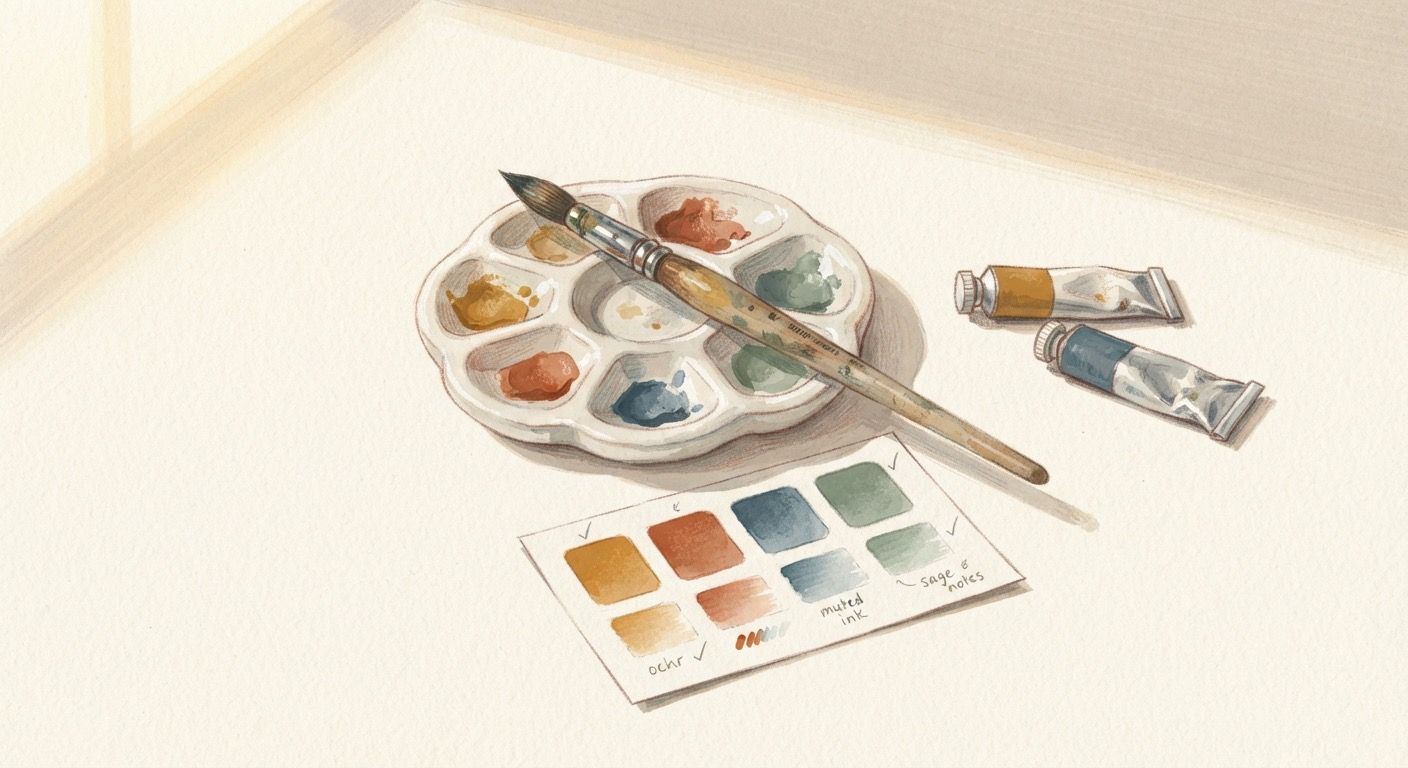
Gouache is opaque watercolor: pigment bound in gum arabic, with a higher pigment load so it covers instead of glazing. Acrylic is pigment bound in an acrylic polymer emulsion that dries into a permanent, flexible film. Both are opaque, water-based and sold in similar-looking sets, which is why gouache vs acrylic is a common first question for new painters. Once dry they behave very differently: gouache stays water-soluble and dries flat and matte, while acrylic is set for good. That one difference decides which surfaces, techniques and projects each paint suits, and this guide walks through it so you buy the right one first.
Research-based, not hands-on tested. The comparison draws on how each paint’s binder works and on established painting practice; set contents and finishes are the makers’ own claims. I did not paint side-by-side swatches. My method.
The short answer
- Choose gouache if you paint on paper: illustration, sketchbooks, lettering, design work and small studies. It covers in one coat, dries matte and lets you rework dry paint with water.
- Choose acrylic if you want canvas paintings, crafts or anything on wood, rocks or fabric. It dries permanent, so layers stay put and finished work can be varnished.
- Not sure yet? Think about the surface you will reach for most. Paper points to gouache; canvas and objects point to acrylic.
Gouache vs acrylic side by side
| Gouache | Acrylic | |
|---|---|---|
| Binder | Gum arabic, like watercolor | Acrylic polymer emulsion |
| Finish | Flat and matte | Matte to glossy, by brand |
| Once dry | Rewets with water | Permanent and water-resistant |
| Layering | Wet layers can lift the one below | Dry layers stay put |
| Best surfaces | Paper and board | Canvas, wood, paper, rocks, fabric (with medium) |
| Thick paint | Can crack | Stays flexible |
| Dried on the palette | Comes back with a damp brush | Peels off as waste |
How the two paints really differ
Finish and coverage
Both paints are opaque, so light colors can go over dark ones. Gouache dries completely matte, with no shine to catch the light, which is why illustrators like it for flat color fields and for artwork they scan or photograph. Acrylic’s sheen depends on the paint: craft and student paints run from matte to glossy, and a matte medium can flatten a glossy one.
Drying and rewetting
This is the deciding difference. A dried gouache layer softens again under a wet brush, so you can blend an edge or lift a mistake hours later. The same property means a heavy wet stroke on top can disturb what is underneath. Acrylic is water-soluble only while wet; once dry, nothing short of a solvent moves it. You can glaze thin color over dry layers without fear, but you cannot rework them.
Color shift as it dries
Acrylic’s binder goes from milky to clear, so colors often dry slightly darker. In gouache, light colors can dry a touch darker and dark colors a touch lighter. With either paint, let a test swatch dry before painting a large area.
Surfaces and thickness
Gouache belongs on paper. Thick gouache is brittle, so heavy layers can crack, especially on a surface that flexes, such as stretched canvas. Acrylic stays flexible, which is why it is the usual choice for canvas, and with the right primer or medium it also works on wood, rocks, ceramic and fabric. My acrylic paint guide covers craft, student and artist grades and heavy versus fluid bodies.
Cleanup and waste
Gouache is forgiving to clean: paint left on a palette rewets for the next session, and brushes rinse out easily. Acrylic punishes neglect. Paint that dries in the bristles ruins a brush, and dried palette paint is lost, so painters squeeze out small amounts or use a stay-wet palette.
Gouache vs acrylic: which one for your projects?
| If you mostly want to… | Start with |
|---|---|
| Fill a sketchbook or illustrate on paper | Gouache |
| Paint flat graphic color for prints or scans | Gouache |
| Paint on canvas you will hang or sell | Acrylic |
| Decorate rocks, wood, pumpkins or shoes | Acrylic |
| Paint small studies outdoors | Either; gouache packs lighter on paper |
If you already paint in watercolor, gouache will feel familiar: same water, same paper, more coverage. My watercolor guide explains the transparent side of that family, and gouache vs watercolor compares the two directly.
A starter set for each
 Research-based
HIMI Gouache Paint Set, 24 Colors × 30 ml Jelly Cups
Best for paper and illustration
Paid link · I may earn from it
- Colors
- 24
- Format
- 30 ml (1 oz) jelly cups with sealing lids
A complete gouache starter in one case: 24 colors in sealed jelly cups, a palette and three brushes. Open a cup and paint; nothing to squeeze or set up.
Twenty-four colors in sealed 30 ml jelly cups, with a palette and three brushes, so you can try gouache without building a kit. The maker describes an opaque, matte finish that rewets with water. For the 48-color twin-cup set I own and paint with, see my HIMI Jelly Gouache review; for a smaller tube set that teaches mixing, see my gouache guide.
Good fit if
- Beginners who want every color ready in one box, with palette and brushes included
- Illustration, journaling and small studies where many ready-made colors save mixing
- Gift buyers who want a complete, giftable set
Skip it if
- You want to learn color mixing from a few primaries; a small tube set teaches it better
- You need layers that stay put when painted over; gouache reactivates with water once dry
All maker specs
- Colors
- 24
- Format
- 30 ml (1 oz) jelly cups with sealing lids
- Includes
- Palette, 3 brushes, carrying case
- Finish
- Opaque and matte (per listing)
- Rewets
- Yes, with water once dry (per listing)
- Safety label
- ASTM D-4236 and EN71 conformance (per listing)
Worth knowing
- Close each lid after a session and do not leave water pooled in a cup; damp, sealed paint can grow mold.
- Gouache shifts slightly in value as it dries; test a mix on scrap before a large area.
Specs are the maker's own figures from the product listing, not my measurements. Listing checked October 12, 2026 for this exact variant: 24 colors × 1 oz (30 ml) jelly cups, green carrying case, with palette and 3 brushes.How I pick
 Research-based
Shuttle Art Acrylic Paint Set, 36 Colors
Best for canvas and crafts
$25.99List Price: $31.99Save 19%
as of Nov 3, 2026, 11:23 UTCDetails
Price and availability show on Amazon.
Paid link · I may earn from it
- Colors
- 36, incl. metallic gold and silver
- Size
- 2 fl oz (60 ml) bottles
A big bottle set for crafts, rocks, canvas practice and paint nights: fluid, quick-drying craft acrylic in enough colors that a beginner rarely has to mix.
Thirty-six colors in 2 oz bottles with twelve brushes and a palette. The maker suggests canvas, wood, rocks, fabric and ceramic, the surfaces where acrylic’s permanent film earns its place. This is fluid craft paint, so add a tube of heavy-body white later if you want textured strokes.
Good fit if
- Rock painting, wood crafts, pumpkins and kids' projects (with old clothes)
- Paint nights and classes where many people share one set
- Beginners learning to layer and blend before buying artist paint
Skip it if
- You want thick, textured strokes; bottle acrylic is fluid
- You plan to sell paintings and need documented pigments and lightfastness
All maker specs
- Colors
- 36, incl. metallic gold and silver
- Size
- 2 fl oz (60 ml) bottles
- Extras
- 12 brushes + 1 palette
- Finish
- Gloss (per listing)
- Safety label
- ASTM D-4236 conformance (per listing)
Worth knowing
- Acrylic washes out with soap and water only while wet; dry paint on clothes and brushes is permanent.
- The included brushes are fine for starting; most painters upgrade brushes first.
Specs are the maker's own figures from the product listing, not my measurements. Listing checked October 11, 2026 for this exact variant: 36 × 2 fl oz (60 ml) bottles with 12 brushes and a palette (model SA MAP36).How I pick
Whichever you choose, paint on heavy paper or a primed panel rather than printer paper. My sketchbook guide explains paper weights by medium.
Can you use gouache and acrylic together?
Yes, in the right order. Acrylic under gouache works well on paper: a dry acrylic underpainting will not lift when you paint gouache on top. The reverse is riskier, because acrylic over gouache sits on a layer that can soften with water, and it may not bond well. Test the combination on scrap first.
Acrylic gouache vs gouache and acrylic
Acrylic gouache is a hybrid: gouache’s flat, matte, opaque look with an acrylic binder, so it dries permanent and does not rewet. Holbein sells it as Acryla Gouache and Turner as Acryl Gouache, which is why you will also see “acryla gouache”. Neither set above is acrylic gouache.
| Gouache | Acrylic gouache | Acrylic | |
|---|---|---|---|
| Binder | Gum arabic | Acrylic | Acrylic polymer emulsion |
| Finish | Flat and matte | Flat and matte | Matte to glossy, by brand |
| Once dry | Rewets with water | Permanent | Permanent |
| Layering | Wet layers can lift the one below | Dry layers stay put | Dry layers stay put |
| Dried on the palette | Comes back with a damp brush | Lost | Lost |
- Acrylic gouache vs gouachethe same matte look, but you trade rewetting for layers that stay put. Choose it if lifting underlayers frustrates you; stay with gouache if you like softening an edge hours later or reusing dried palette paint.
- Acrylic gouache vs acrylicthe same permanence, with a flat, even matte finish made for the solid color fields illustrators buy gouache for. Regular acrylic needs a matte medium to get close.
Questions
Is acrylic gouache the same as gouache?
No. It looks like gouache, flat and matte, but its acrylic binder dries permanent, so it does not rewet with water the way gouache does.
Is gouache or acrylic easier for beginners?
Both are beginner-friendly in different ways. Gouache lets you fix mistakes by rewetting them; acrylic lets you cover mistakes with a new layer that will not lift. Pick by surface rather than by difficulty.
Does gouache need varnish like acrylic?
Usually not. Gouache is normally framed behind glass, and varnish can darken its matte finish. Acrylic is often varnished once fully cured to even out the sheen and protect the surface.
Can I paint gouache on canvas?
In thin layers on primed canvas, some painters do, but thick gouache can crack as the canvas flexes. For canvas work, acrylic is the more reliable choice.