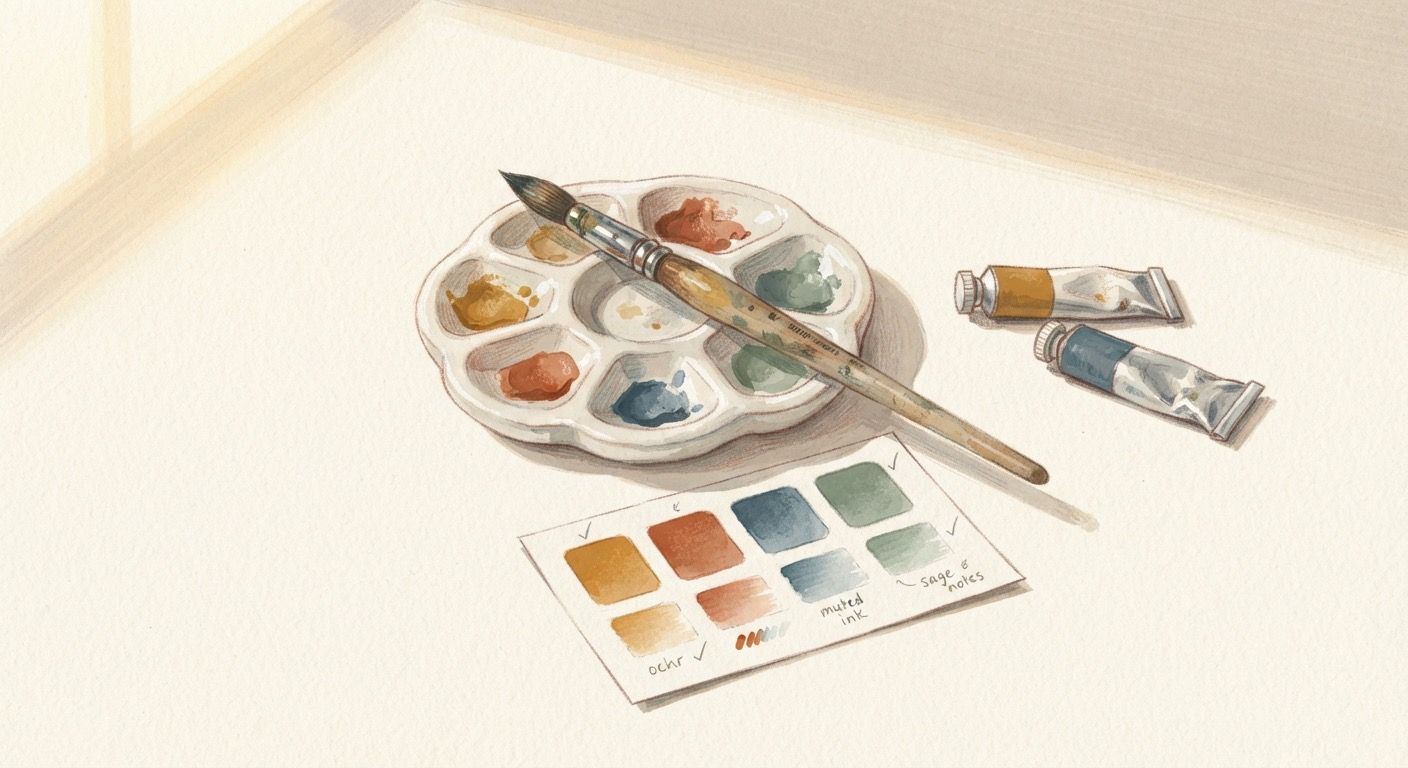
Gouache and watercolor come from the same family: pigment bound in gum arabic, thinned with water, painted on paper. Watercolor is made to be transparent, so light passes through each layer and the white of the paper does the job of white paint. Gouache carries more pigment, and in many brands an opaque white filler, so it covers what is underneath and dries flat and matte. That is gouache vs watercolor in one line: transparency against coverage. Both rewet with water once dry, which is why they share paper, brushes and palettes, and why the choice comes down to how you like to build a painting.
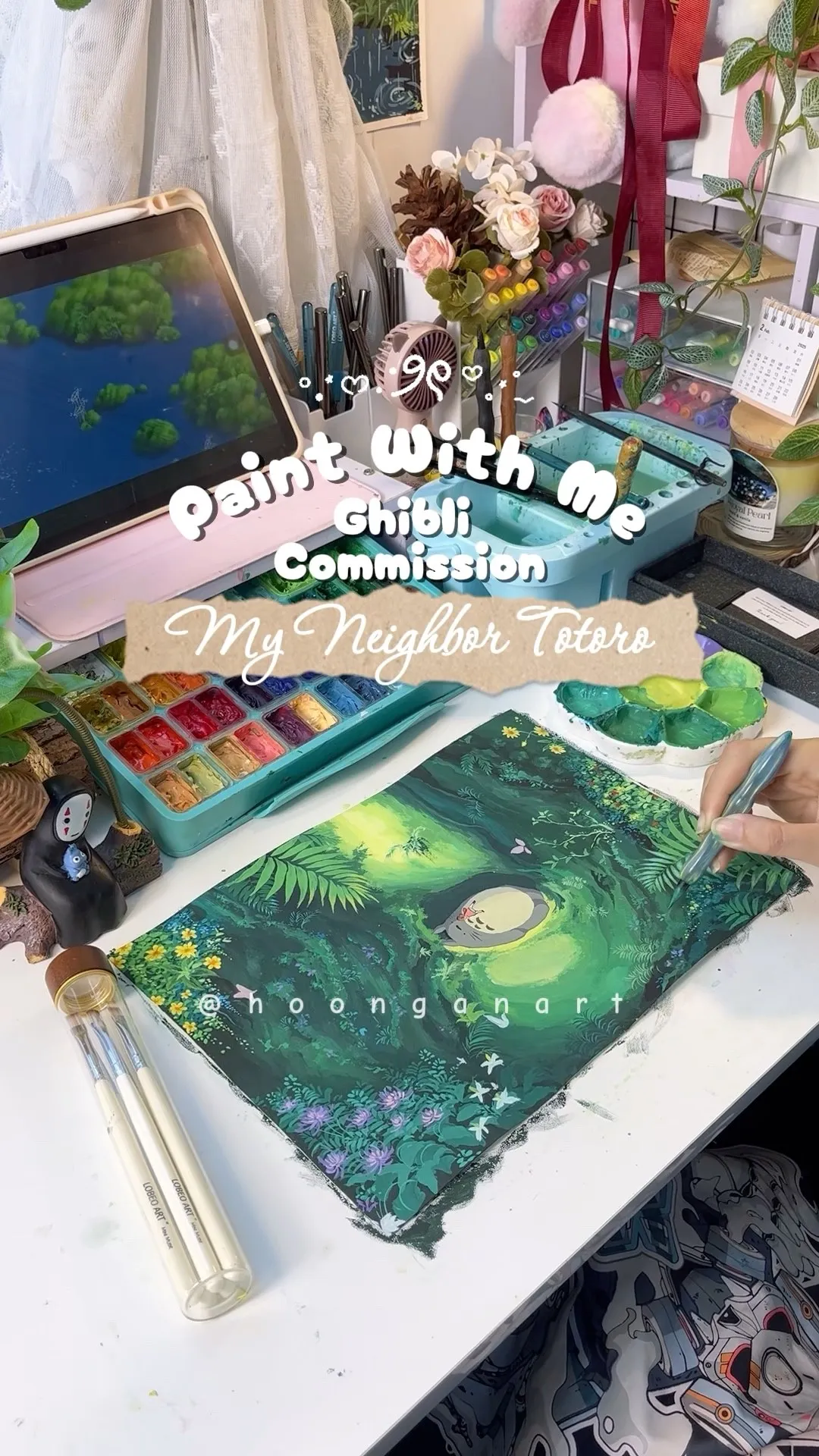
Most of my paintings are gouache, including my Studio Ghibli fan-art paint-alongs of My Neighbor Totoro and Only Yesterday. The watercolor side of this guide is research from makers’ listings and established painting practice. My method.
The short answer
- Choose watercolor if you love glowing, transparent washes for landscapes, florals and loose sketches, and you are happy to plan your lights ahead, because the paper is your white.
- Choose gouache if you want flat, opaque color, light over dark, and the freedom to paint over a mistake once it dries. It is what I paint with.
- Want some of both? Gouache thinned with plenty of water flows like watercolor, and opaque watercolors such as Fuumuui CREAMORA are sold as a midway paint.
Gouache vs watercolor side by side
| Gouache | Watercolor | |
|---|---|---|
| Binder | Gum arabic | Gum arabic |
| Look | Opaque, flat and matte | Transparent and luminous |
| Lights and white | Mix in white paint | Leave the paper bare |
| Layering | Light over dark; a wet layer can lift the one below | Dark over light; each glaze tints the last |
| Fixing mistakes | Paint over once dry | Lift some color; hard to cover |
| Color as it dries | Lights can dry darker, darks lighter | Dries lighter than it looks wet |
| Dried on the palette | Rewets | Rewets |
| Paper | Watercolor or heavy mixed-media paper | Watercolor paper, ideally 100% cotton |
How gouache and watercolor really differ
Transparency and where white comes from
In watercolor you keep the whites by not painting them: a highlight is bare paper, saved from the first wash. In gouache, white is a paint. You lighten a color by adding white rather than water, and a white highlight goes on last, over everything else. That is why white is the gouache color you will use most.
Layering and corrections
Watercolor works light to dark. Each transparent layer tints the one below, which gives depth but means a dark mistake is hard to hide. Gouache covers, so you can paint a light color over a dark one once it dries. The catch is that dry gouache rewets: a heavy, wet stroke on top can pick up the layer underneath, so lay color in few strokes and let it be.
Water control decides how gouache behaves
Gouache sits between watercolor and acrylic, and the water on your brush sets where. In my own painting, gouache mixed with plenty of water flows and blooms across the page like watercolor; mixed with very little water, it lays down opaque, flat color with coverage like acrylic. Learning to control that water is most of learning gouache, as I write in my HIMI Jelly Gouache review. For the acrylic side of that range, see my gouache vs acrylic guide.
Paint care: jelly cups, pans and tubes
Watercolor pans, and tube paint squeezed into a palette, dry hard and rewet for a long time. Jelly gouache asks more: the box needs regular use and airing so the cups do not mold, and misting so the paint does not dry hard. I use the HIMI Gouache Wetting Spray instead of plain water for that. Tube gouache stays sealed until you squeeze it out.
Paper and palette
Both want watercolor paper or heavy mixed-media paper around 300 gsm, so the sheet stays flat under water. Watercolor benefits most from 100% cotton paper, which takes washes evenly; my watercolor guide explains why. Both mix best on a white palette; my ceramic vs plastic palette guide compares the two materials.
Opaque watercolor vs gouache
Opaque watercolor is watercolor made with more covering power. Fuumuui sells its CREAMORA set as an opaque, semi-solid watercolor and, in the maker’s words, its colors give strong coverage with excellent opacity while transitions between them stay smooth, with soft blending. Mixing white into ordinary watercolor, often called body color, gets part of the way there.
There is no standard line between opaque watercolor and gouache: each maker decides what to call its paint. Treat opaque watercolor as a softer step toward gouache, and gouache as the paint built for full, flat coverage. I own the CREAMORA set and filmed its unboxing, but I have not written my verdict on it yet, so this is Fuumuui’s description, not mine.
Gouache or watercolor: which one for your projects?
| If you mostly want to… | Start with |
|---|---|
| Paint loose landscapes, skies and florals | Watercolor |
| Sketch outdoors with a small pan set | Watercolor |
| Paint illustration with flat, even color | Gouache |
| Add light details over dark areas | Gouache |
| Paint anime and Studio Ghibli-style scenes | Gouache |
| Work in a muted, matte palette that still blends | Opaque watercolor |
A starter set for each
 Research-based
HIMI Gouache Paint Set, 24 Colors × 30 ml Jelly Cups
Best gouache starter set
Paid link · I may earn from it
- Colors
- 24
- Format
- 30 ml (1 oz) jelly cups with sealing lids
A complete gouache starter in one case: 24 colors in sealed jelly cups, a palette and three brushes. Open a cup and paint; nothing to squeeze or set up.
Twenty-four colors in 30 ml jelly cups with a palette and three brushes, so you can try gouache without building a kit. The maker describes an opaque, matte finish that rewets with water. For a smaller tube set that teaches mixing, see my gouache guide.
Good fit if
- Beginners who want every color ready in one box, with palette and brushes included
- Illustration, journaling and small studies where many ready-made colors save mixing
- Gift buyers who want a complete, giftable set
Skip it if
- You want to learn color mixing from a few primaries; a small tube set teaches it better
- You need layers that stay put when painted over; gouache reactivates with water once dry
All maker specs
- Colors
- 24
- Format
- 30 ml (1 oz) jelly cups with sealing lids
- Includes
- Palette, 3 brushes, carrying case
- Finish
- Opaque and matte (per listing)
- Rewets
- Yes, with water once dry (per listing)
- Safety label
- ASTM D-4236 and EN71 conformance (per listing)
Worth knowing
- Close each lid after a session and do not leave water pooled in a cup; damp, sealed paint can grow mold.
- Gouache shifts slightly in value as it dries; test a mix on scrap before a large area.
Specs are the maker's own figures from the product listing, not my measurements. Listing checked October 12, 2026 for this exact variant: 24 colors × 1 oz (30 ml) jelly cups, green carrying case, with palette and 3 brushes.How I pick
 Research-based
Winsor & Newton Cotman Watercolor, 20 Tubes
Best watercolor starter set
$34.33List Price: $49.49Save 31%
as of Nov 3, 2026, 11:23 UTCDetails
Price and availability show on Amazon.
Paid link · I may earn from it
- Colors
- 20
- Format
- 5 ml tubes
A student-grade set from an established watercolor maker, with a sensible spread of warm and cool primaries and earth colors in tubes you squeeze into your own palette.
Twenty 5 ml tubes covering warm and cool primaries, greens, purples and earth colors, from a maker with a long record in watercolor. Squeeze a little of each into a palette, let it dry, and you have a refillable pan palette. My watercolor guide shows all 20 colors.
Good fit if
- Beginners who want a known, consistent student paint
- Painters who prefer filling their own palette wells from tubes
Skip it if
- You want a grab-and-go travel box; pans in a tin are simpler outdoors
- You want single-pigment artist paint for granulation and mixing purity
All maker specs
- Colors
- 20
- Format
- 5 ml tubes
- Grade
- Student (Cotman); some pigments replaced by cheaper ones, named 'Hue'
- Maker says
- High transparency, good tinting strength
Worth knowing
- Squeeze each tube into a palette well and let it dry; it rewets like a pan.
- Paper matters more than paint; use 100% cotton or at least 300 gsm watercolor paper.
Specs are the maker's own figures from the product listing, not my measurements. Listing checked October 11, 2026 for this exact variant: 20 × 5 ml tubes (model 0390665).How I pick
Hands-on: the paint I use
The gouache I paint with, and the opaque watercolor I own. The specs are each listing’s own.


 My video
HIMI Twin Cup Jelly Gouache, 48 Colors
$29.69List Price: $32.99Save 10%
as of Nov 3, 2026, 11:15 UTCDetails
Price and availability show on Amazon.
Paid link · I may earn from it
- Colors
- 48 × 12 g
- Format
- Jelly gouache in twin cups
The gouache set I use for most of my paintings: not a premium brand, but very good paint quality that is widely used by artists—as long as you air the box and mist the cups so they do not mold or dry hard.
Most of my paintings use HIMI gouache: “not a premium brand, but the paint quality is very good.” The full write-up: HIMI Jelly Gouache review.


 My video
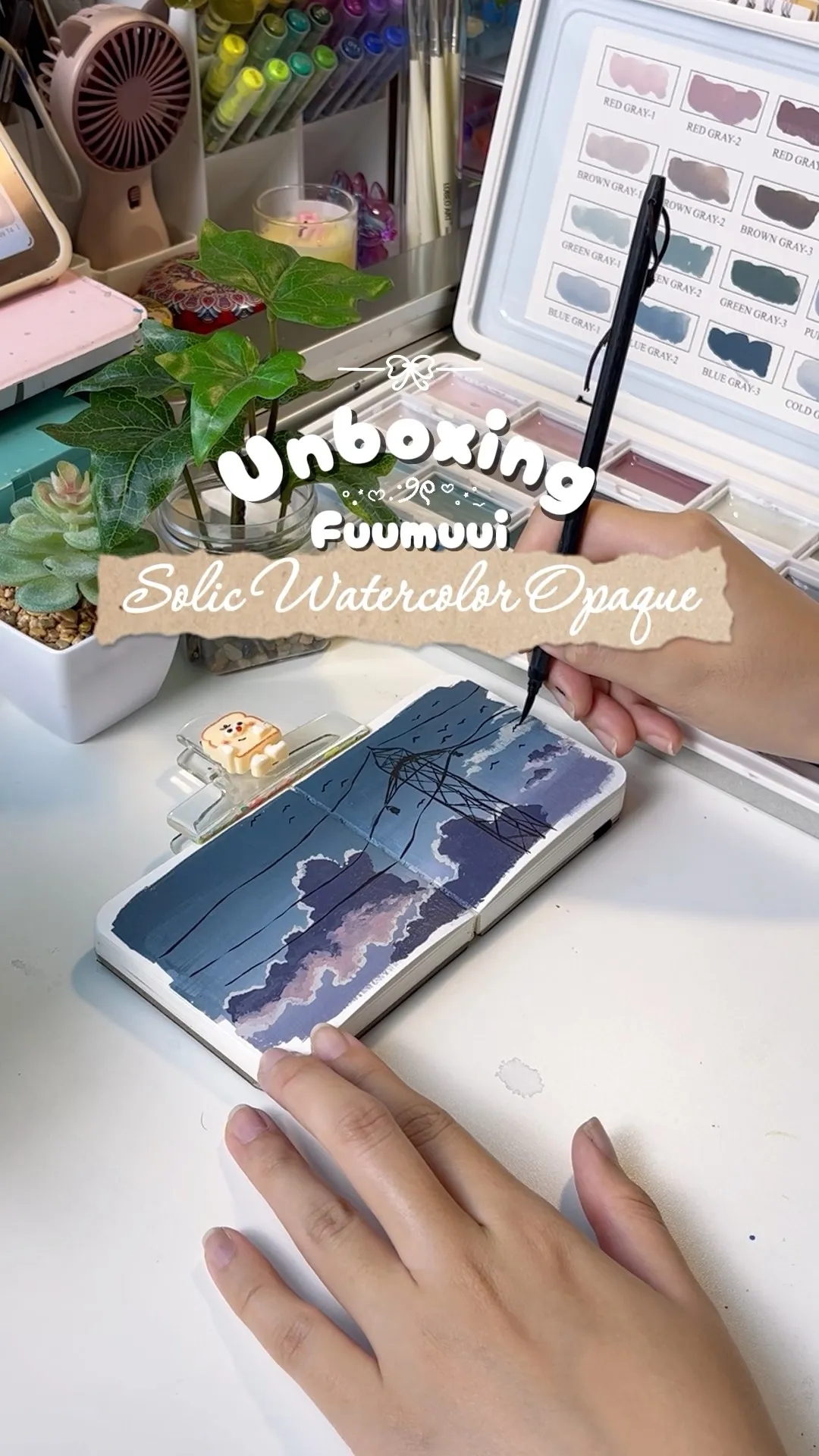
Fuumuui CREAMORA Watercolor, 24 Colors
Paid link · I may earn from it
- Colors
- 24 muted gray tones
- Format
- Semi-solid opaque paint
24 muted gray tones in opaque, semi-solid pans that the maker says cover like gouache and blend like watercolor: what the listing claims, and what my unboxing Short shows.
An opaque, semi-solid watercolor in 24 muted grays that I own and unboxed on camera. No verdict from me yet; what Fuumuui claims and what my Short shows are in the Fuumuui CREAMORA write-up.
Can you use gouache and watercolor together?
Yes, and many painters do. They share a binder, so they mix on the palette and sit happily on the same paper. A common order is watercolor washes first for skies and soft backgrounds, then gouache on top for opaque details and highlights. Because both rewet, keep the gouache strokes light so they do not lift the washes underneath.
Questions
Is gouache just opaque watercolor?
Close, but not quite. Both use gum arabic, but gouache is made with more pigment, often with a white filler, for flat, full coverage. Opaque watercolor is watercolor with more covering power, and makers draw the line differently.
Is gouache or watercolor easier for beginners?
Gouache is more forgiving, because you can paint over a mistake once it dries. Watercolor rewards planning: you save the whites and work from light to dark.
Can I use watercolor paper for gouache?
Yes. Watercolor paper around 300 gsm is a good surface for gouache, and heavy mixed-media paper works too. Thin paper buckles under either paint.
Is gouache or watercolor better for Studio Ghibli-style paintings?
Both work, but most of my paintings are gouache. In my Only Yesterday paint-along, the sky goes on as a broad gradient with a wide flat brush, the greens build up in layers, and fine white wildflowers go in at the end among the dark grass. Small white details painted last are where gouache’s coverage pays off; in watercolor they would have to be saved as bare paper from the start. The paint-along is in my MEEDEN ceramic palette review.